
In conjunction with the Fiona and Stanley Druckenmiller Center for Lung Cancer Research at Memorial Sloan Kettering Cancer Center and the AATS, the Thoracic Surgery Oncology Group (TSOG) was formed in 2017 to support a network of North American thoracic surgery clinical trials relevant to physicians and their patients—something that had been missing from the landscape in recent years. The overarching goal of the group is to improve the understanding of thoracic oncologic diseases and enhance patient care through the administration of multi-site trials focused on recent advances in precision medicine, immunotherapy, and intraoperative imaging.
TSOG will actively accrue patients to relevant investigator-initiated clinical trials, as well as select industry-sponsored clinical trials, designed to improve outcomes for patients with thoracic malignancies. Learn more about joining the network and current RFA.

Chair
David R. Jones, MD
Memorial Sloan Kettering Cancer Center

Member
Raphael Bueno, MD
Brigham and Women's Hospital

Member
David H. Harpole, MD
Duke University

Member
Ara A. Vaporciyan, MD
The University of Texas MD Anderson Cancer Center
Current Sites and Principal Investigators
| Allegheny General Hospital Cancer Center | Benny Weksler, MD |
| Baylor College of Medicine | Robert Taylor Ripley, MD |
| Brigham and Women’s Hospital | Raphael Bueno, MD |
| Centre Hospitalier de l’Université de Montréal (CHUM) | Moishe Liberman, MD |
| Duke University | David Harpole, MD |
| Hartford HealthCare | Brian Whang, MD |
| Hospital of Fox Chase Cancer Center | Stacy Su, MD |
| Massachusetts General Hospital | Michael Lanuti, MD |
| Mayo Clinic Jacksonville | Ian Makey, MD |
| Mayo Clinic Rochester | Dennis Wigle, MD |
| McGill University | Jonathan Spicer, MD |
| McMaster University (St. Joseph’s Hamilton) | Yaron Shargall, MD |
| Memorial Sloan Kettering Cancer Center | David R. Jones, MD |
| New York-Presbyterian/Weill Cornell Medical Center | Nasser K. Altorki, MD |
| NorthShore University Healthsystem | Seth Krantz, MD |
| NYU Grossman School of Medicine | Harvey Pass, MD |
| Roswell Park Comprehensive Cancer Center | Sai Yendamuri, MD |
| Rush University Medical Center | Christopher W. Seder, MD |
| Stanford University | Douglas Liou, MD |
| The University of Texas MD Anderson Cancer Center | Ara Vaporciyan, MD |
| Thomas Jefferson University | Nathaniel R. Evans III, MD |
| University of Alabama at Birmingham | James Donahue, MD |
| University of Arizona | Stephanie Worrell, MD |
| University of California Los Angeles | Bryan Burt, MD |
| University of California San Diego | Mark Onaitis, MD |
| University of Chicago | Jessica Donington, MD |
| University Hospitals Cleveland Medical Center | Philip Linden, MD |
| University of Michigan | Jules Lin, MD |
| University of Minnesota | Ilitch Díaz Gutiérrez, MD |
| University of Pennsylvania | Doraid Jarrar, MD |
| University of Pittsburgh | James Luketich, MD |
| University of Southern California | Scott Atay, MD |
| University of Toronto (UHN) | Thomas Waddell, MD |
| Washington University in St. Louis | Benjamin Kozower, MD |
| West Virginia University | Alper Toker, MD |
TSOG 101
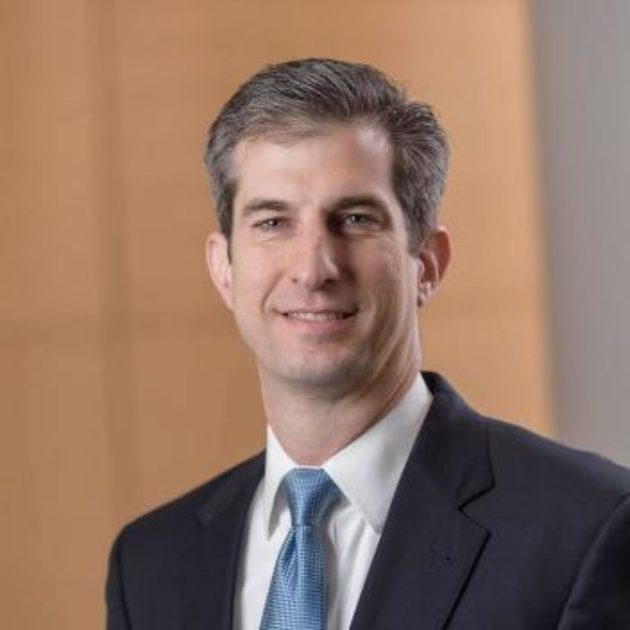
Dr. James M. Isbell, MD, MSCI, Memorial Sloan Kettering Cancer Center
“Study to evaluate perioperative circulating tumor DNA as prognostic biomarker in patients undergoing neoadjuvant therapy for resectable non-small cell lung cancer.” —TSOG 101
The aim of this study is to determine the validity of using quantitative ctDNA as a surrogate marker for pathologic treatment response in patients receiving neoadjuvant therapy for stage IIA-IIIB NSCLC who are undergoing curative-intent resection.
The second aim is to determine, in patients with NSCLC, the prognostic value of persistent ctDNA following curative-intent resection for predicting recurrence, disease-free survival, and overall survival.
The third aim is to correlate the percent change in levels of ctDNA to percent change in the SUVmax of the primary tumor on 18-FDG-PET scan before and after neoadjuvant therapy.
TSOG 102
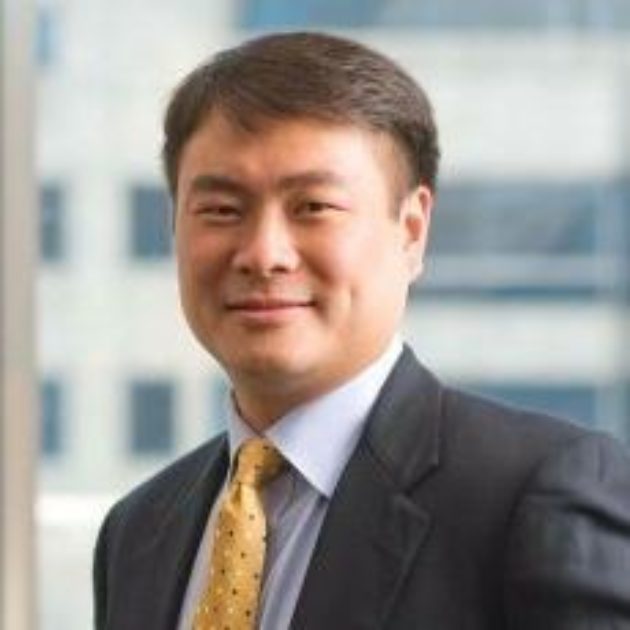
Dr. James Huang, MD Memorial Sloan Kettering Cancer Center
“Registry trial of active surveillance for multifocal ground glass opacities (GGOs).” —TSOG 102
The primary objective of this study is to determine lung cancer–specific survival at 5 years among patients undergoing active surveillance for GGOs.
The secondary objective is to determine the following endpoints among patients undergoing active surveillance for GGOs: overall survival, freedom from progression (any), freedom from nodal progression, freedom from distant progression, cumulative incidence of intervention (biopsy or resection), cumulative incidence of a new GGO, and cumulative incidence of confirmed lung cancer diagnosis.
TSOG 103
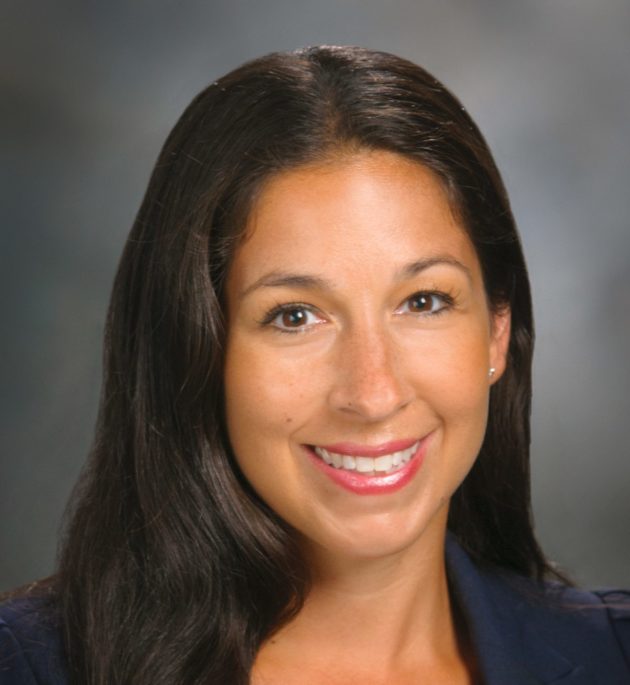
Dr. Mara Antonoff, MD The University of Texas MD Anderson Cancer Center
“The role of multimodality management in risk-stratified patients with lung-limited metastatic colorectal cancer.” —TSOG 103
The primary objectives of this study are to compare recurrence-free survival in patients with “low-risk” lung-limited mCRC undergoing pulmonary metastasectomy with or without perioperative chemotherapy, as well as to compare overall survival in patients with “high-risk” lung-limited mCRC receiving systemic chemotherapy with or without surgical resection.
Additional exploratory objectives involve the evaluation of changes in ctDNA following surgical resection and/or systemic chemotherapy in patients with lung-limited mCRC.
TSOG 104

Dr. Harvey Pass, MD New York University Langone Medical Center
"A prospective, non interventional, trial evaluating the diagnostic accuracy of FBLN3
for mesothelioma pleural effusions." —TSOG 104
The primary objective of this study is to prospectively create a virtual reference set of pleural effusion samples from patients referred for treatment of a pleural effusion which can be used for future biomarker discovery and validation studies.
The secondary objectives using pleural effusion samples, will be to calculate the FBLN3 concentration and compare the levels between the cohorts collected
including non-mesothelioma benign, non-mesothelioma malignant, and mesothelioma.
We will determine the AUC using FBLN3 to distinguish pleural effusions of mesothelioma vs non mesothelioma individuals.
TSOG 105
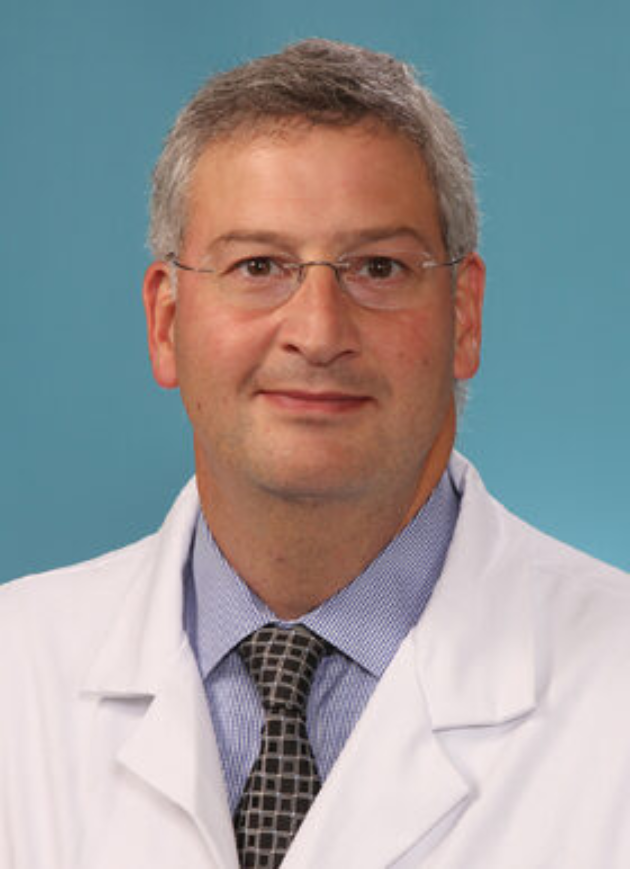
Dr. Benjamin D Kozower, MD, MPH, Washington University in St. Louis
"Comparing the effectiveness of surgery versus stereotactic body radiation therapy for stage I non-small cell lung cancer (SORT)”. -TSOG 105
The primary objectives of this study are to compare disease-free survival (DFS) and short – and long-term patient reported outcomes (PROs) between surgery and SBRT in stage I NSCLC patients. The secondary objective is to develop and validate prediction models for treatment outcomes for an individual patient with stage I NSCLC.


For additional details about TSOG and how to get involved, please contact:

Maria Singh
Project Manager, Memorial Sloan Kettering Cancer Center
singhm1@mskcc.org

Alain Vincent
Clinical Research Manager, Memorial Sloan Kettering Cancer Center
vincenta@mskcc.org

Erin Carroll
Research Project Associate, Memorial Sloan Kettering Cancer Center
carrolle@mskcc.org
